

Tips For Packing Appliances When Moving Interstate
Moving
Storage
Get Your Free Quote
"*" indicates required fields
"*" indicates required fields
Packing appliances when moving interstate starts about 48 hours before the truck arrives: defrost and dry the refrigerator, drain the washer, and reinstall the front-load washer's shipping bolts. A standard refrigerator weighs close to 300 lbs and a washer around 170 lbs, so under the default 60-cents-per-pound liability your mover would owe just $180 and $102 if either is destroyed in transit. Gas ranges and gas dryers have to be disconnected and capped by a licensed technician before loading — an interstate carrier arranges a third-party service for that rather than doing it in-house.
Moving interstate can be both exciting and overwhelming, especially when it comes to your appliances. From that high-end espresso machine in the kitchen to your hair dryer in the bathroom, each device requires special care to avoid damage during transit. Whether you’re moving to another state for work, family, or simply a change of scenery, packing appliances when moving interstate properly can save you money, time, and a serious headache. And Columbine Moving & Storage CO is here to guide you on packing up appliances from your kitchen, bathroom, and other parts of your home. We’ll also share tips on wrapping appliances securely, and give you a breakdown of how to prep them for various types of storage—like portable containers, climate-controlled units, and long-term warehouse spaces.
Appliance prep times, weights and default coverage
| Appliance | Start prep | Non-negotiable step | Typical weight | Mover owes at $0.60/lb |
|---|---|---|---|---|
| Refrigerator/freezer | 48 hours out | Defrost, dry fully, keep doors ajar until loading | 200–400 lbs | $120–$240 |
| Front-load washer | 24 hours out | Reinstall shipping bolts; transport upright | 130–250 lbs | $78–$150 |
| Top-load washer | 24 hours out | Drain hoses, pad the drum, tape the lid | 130–250 lbs | $78–$150 |
| Electric dryer | Day before | Empty lint trap, detach vent hose | 100–175 lbs | $60–$105 |
| Gas dryer | 1 week out | Licensed technician caps the gas line | 100–175 lbs | $60–$105 |
| Dishwasher | 3 days out | Disconnect hoses, air-dry with the door open | 60–108 lbs | $36–$65 |
| Range/oven | 1 week out | Tape or remove racks; cap gas line if applicable | 100–250 lbs | $60–$150 |
| Over-the-range microwave | Packing day | Wrap turntable separately, tie the cord | 50–75 lbs | $30–$45 |
What Happens to Appliances During a Multi-Day Interstate Haul?
A local move puts an appliance on a truck for an hour. An interstate shipment out of the Roaring Fork or Eagle Valley can spend three to ten days in transit, crossing 10,000-foot passes on I-70 and then sitting in a trailer that swings between freezing nights and 100°F afternoons. Two things follow from that.
Moisture is the real enemy. Any water left in a washer pump, a dishwasher sump, or a defrosted freezer has days to grow mold in a sealed cabinet. This is why “clean and dry” is not a nice-to-have on a long haul the way it is on a cross-town move.
Movement is the other. Appliances travel upright, strapped to the trailer wall, never stacked under boxes. If your delivery date is not fixed — a common situation when closing dates slip — appliances should go into climate controlled storage rather than a standard unit, since electronic control boards and rubber door seals degrade fast in an unheated space through a Colorado winter.
Why Proper Packing Appliances Matters
Appliances are some of the most expensive items in your home. Unlike books or clothes, these machines often contain delicate internal parts, wiring, and sometimes liquids that can leak during a move. Improperly packed appliances can lead to broken parts, electrical failures, or even hazardous situations like fires or water damage. A busted microwave or broken washer can also leave you scrambling for replacements and repairs in a brand-new state—right when you need comfort and normalcy the most. And to make sure everything is packed properly, hire professional interstate movers and let them provide the supplies and do the packing.
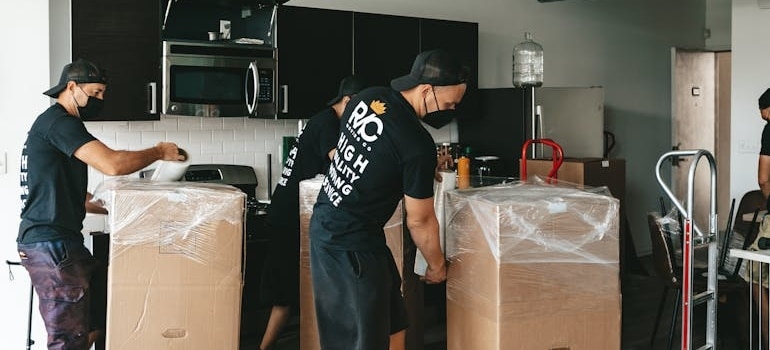
Packing Appliances When Moving Interstate: A 9-Step Countdown
An interstate move runs on a fixed schedule, and appliances are the one category you cannot prepare the morning the truck shows up. A refrigerator needs two days to defrost and dry. A gas dryer needs a technician appointment. Work backwards from your load date:
- Two weeks out — photograph every hookup: water lines, vent hoses, power cords, and the back panel of the washer and dryer.
- Ten days out — book a licensed technician for any gas appliance, and order replacement shipping bolts if the originals are gone.
- One week out — locate the owner’s manuals and pull the transit-bolt instructions for your washer model.
- Five days out — run the dishwasher and washer for the last time; after this, they get cleaned, not used.
- Three days out — disconnect the dishwasher, dry it with the door propped open, and coil the hoses inside it.
- 48 hours out — empty the refrigerator, unplug it, and leave the doors open over towels so it defrosts and dries completely.
- 24 hours out — drain the washer hoses, install the shipping bolts, and tape all cords to the back of each unit.
- Load day — wrap every unit in moving blankets, keep it upright, and load appliances last so they come off first.
- Delivery day — let the refrigerator stand upright 24 hours before plugging it in, then reconnect one appliance at a time.
Packing Appliances From the Kitchen
Kitchen appliances are usually the bulkiest—and the trickiest—to handle. They range from large, heavy items like refrigerators to fragile electronics like blenders and air fryers. Following are some time-saving tips for packing kitchen items:
- Refrigerator – Before you start wrapping appliances, unplug your fridge at least 24 hours in advance. This gives it time to defrost, dry out, and prevent mould growth. Then, clean out all food and wipe it down thoroughly. Next, remove and separately wrap the shelves with bubble wrap. Lastly, secure the doors with moving tape or a strong rope—but don’t over-tighten.
- Microwave – Remove the glass turntable and wrap it separately with newspaper and bubble wrap. Use foam padding to protect the inside of the microwave, and secure the cord with a zip tie. Place it in a snug box and fill gaps with packing peanuts to avoid movement.
- Small Appliances (Coffee Maker, Blender, Toaster) – Clean and dry each one. Use original packaging if available. If not, choose a sturdy box, wrap each item in bubble wrap, and stuff soft towels around them for padding. Label each box: “Kitchen – Fragile – This Side Up.”
Avoid packing them with sharp objects like knives or heavy pans, as these can shift during transit and cause damage.
How Do You Prepare Large Appliances for a Move Across State Lines?
Large appliances fail in transit for predictable reasons: trapped water, an unsecured drum, or a unit laid on its side. Each machine has one step that matters more than the rest.
Refrigerator
Unplug it 48 hours before loading, not 24. Frost in the freezer compartment melts slowly, and any water left inside will smell by the time the trailer reaches its destination. Shut off and drain the ice maker’s water line, remove the shelves and drawers and wrap them separately, then leave the doors open until the crew arrives. Transport upright. If the unit had to travel on its back or side, let it stand upright for a full 24 hours before power goes back on so the compressor oil drains out of the refrigerant lines.
Washing machine
Run a hot cycle with washing machine cleaner, then drain the drum and both hoses into a bucket. The step people skip: front-load washers need their shipping bolts reinstalled. Those bolts lock the drum to the cabinet, and Whirlpool and Maytag both recommend an authorized technician install them. Without the bolts, the suspension springs can unhook and the drum can slam into the internals — a repair that easily exceeds what released value protection pays out. If the original bolts are gone and replacements are not available, pack the drum tightly with one to three moving blankets so nothing can swing, and keep the machine upright the entire trip.
Dryer
Empty the lint trap and vacuum the internal vent housing — lint packed against a heating element is a fire risk once the dryer is reconnected. Detach the vent hose, tape the cord to the back panel, and tape the door shut. A gas dryer is a different job entirely: the line has to be shut off and capped by a qualified technician before the crew will touch it.
Dishwasher
Stop using it three to five days before the move. Shut off the water supply, disconnect the inlet and drain hoses, and dry the metal ends before wrapping them in towels and stowing them inside the tub. Leave the door propped open the whole time so the sump and seals dry out. A built-in 24-inch unit averages 77 lbs, which makes it a two-person carry even though it looks small.
Range and oven
Remove the racks or tape them in place so they cannot swing and dent the door. Tape the oven door shut and pad the control knobs, which snap off easily. Electric ranges usually plug into a dedicated 240-volt outlet and can be unplugged like anything else. Gas ranges cannot — see below.
Which Appliances Need a Licensed Technician Before Moving Day?
Interstate moving crews are licensed to transport household goods, not to work on gas or plumbing. Anything that connects to a gas line has to be handled before the crew arrives:
- Gas range or cooktop — the supply line must be shut off, disconnected, and capped.
- Gas dryer — same requirement, plus the vent has to be detached.
- Gas water heater or built-in gas oven — capping and, in most jurisdictions, a permit.
- Hardwired appliances (some cooktops, built-in ovens, garbage disposals) — an electrician disconnects at the junction box.
Two things to budget for. First, if the appliance is not going back into an identical hookup at the destination, rerouting a gas line runs roughly $15–$25 per linear foot including materials and labor. Second, most interstate carriers, including Columbine Moving & Storage CO, arrange this as a third-party service that appears as a separate accessorial line on your estimate — ask for it in writing before you sign, so it does not surface as a surprise charge on delivery day.
Packing Up Appliances From the Bathroom
Though smaller in size, bathroom appliances still need care.
- Hair Dryers, Straighteners, and Electric Razors – Wipe them clean and make sure they are completely dry. Coil cords neatly and use Velcro straps or zip ties to keep them secure. Wrap in soft cloths or bubble wrap. Put similar items together in one box, preferably padded with towels or washcloths.
- Electric Toothbrushes and Water Flossers – Remove batteries if possible. Drain out any water. Clean and dry all parts before packing.
A padded toiletries bag or small plastic bin works great here. If your move is going to take a few days, keep a travel toothbrush with you.
Other Household Packing Appliances Tips
Beyond the kitchen and bathroom, don’t forget the appliances scattered throughout the rest of your home, like vacuum cleaners, air purifiers, space heaters, and humidifiers. Start by emptying and cleaning out vacuum dust containers or replacing the bags, and detach any removable parts to pack separately. Cover and secure cords, and if items are placed in storage, wrap the base in bubble wrap for added protection. For space heaters and fans, a thorough dusting is essential, and delicate grill areas should be shielded with foam wrap or moving blankets. When it comes to dehumidifiers and humidifiers, always drain all water and let them dry completely before packing to prevent leaks or mold during the move.
How to Wrap Appliances the Right Way
Correctly wrapping appliances is the difference between safe arrival and costly damage. Here’s what wrapping supplies to use and how to do it right:
- Use bubble wrap generously, especially around sharp corners and glass panels.
- Wrap cords separately and secure them with zip ties.
- Cover with moving blankets if the appliance is too big for a box.
- Avoid plastic wrap directly on the surface of stainless steel appliances—it can trap moisture and lead to rust or discoloration.
- Label boxes clearly with the appliance name and arrows indicating the upright direction.
Specialized Storage: Prepping Appliances for Different Options
Sometimes you’re not moving directly into your new home, and you need to store your appliances temporarily. Here’s how to adapt your packing appliance technique for different types of storage.
For portable storage containers, begin by wrapping large appliances in moving blankets, placing heavier items on the bottom, and keeping everything upright and securely fastened to prevent shifting during transit. However, the best solution would be to use the professional portable storage Aspen companies offer and ensure peace of mind, especially when moving the portable storage itself.
If you’re opting for climate-controlled storage, which is ideal for sensitive electronics and appliances like microwaves, hair tools, or coffee machines, use breathable covers instead of plastic wrap to avoid trapping moisture and make sure each item is completely dry to prevent mold. Finally, for warehouse storage, especially for long-term needs, avoid stacking heavy boxes on top of appliances, use pallets to keep them off the ground and away from potential moisture, and cover them with thick cloth or moving blankets to protect against dust and damage.

Tips For Moving Day
When the big day arrives, here’s how to ensure your packing appliances strategy pays off:
- Load appliances last so they’re first to unload at your new home.
- Double-check boxes for loose parts or missing cords.
- Keep instruction manuals in a labeled envelope—these can be a lifesaver when reconnecting everything.
Also, take pictures of how wires and hoses were originally connected, especially for things like washers, dryers, and entertainment systems. This will save time and stress during setup.
Unpacking and Reconnecting
Once you arrive, let large appliances sit for 24 hours before plugging them in. This allows internal fluids to settle—especially in refrigerators and freezers. Check for any signs of damage before plugging in. Plug in one appliance at a time to avoid electrical overload. Make sure everything is level and stable before using, particularly for washers and dryers.
Final Thoughts on Packing Appliances
Whether it’s your trusty coffee machine or a high-powered hair dryer, taking the time to prepare and wrap appliances properly pays off. With the right approach, you’ll avoid expensive damage, feel more organized, and have an easier time settling into your new home. From packing up appliances in the kitchen and bathroom to understanding how to store them temporarily, planning the interstate packing is key. Label clearly, cushion generously, and keep things clean and dry. And don’t forget: the better your packing appliances strategy, the smoother your move—no matter how many state lines you cross.


Been working with them for our Moves in Aspen and Vail. Great company and great service.
Louis-Philippe Paquin

Frequently Asked Questions
How long before an interstate move should I defrost my refrigerator?
Unplug and empty the refrigerator 48 hours before the truck loads. Frost in the freezer compartment melts slowly and any moisture left inside will develop mold over a multi-day haul. Prop the doors open over towels so the interior dries completely, and drain the ice maker's water line at the same time.